
‘Elabbon (A-9446, A-9497)
Permit/License Number
A-9446, A-9497
Excavation Report
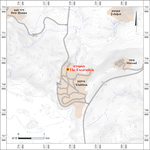
During January 2023, a trial excavation was conducted at ‘Elabbon (Permit Nos. A-9446, A-9497; map. ref. 237840/749666; Fig. 1), prior to the construction of a road. The excavation, on behalf of the Israel Antiquities Authority and financed by the ‘Elabbon Local Council, was directed by U. Berger (field photography), with the assistance of Y. Zilpa and Y. Ya‘aqobi (administration), H. Mamalya and M. Asakly (preliminary inspection), A. Kleiner (surveying and aerial photography), E. Dalali-Amos (plan), E. Stern (pottery), A. Shapiro (map and pottery photography), H. Tahan-Rosen (finds drawing), A. Glick (ammunition; appendix), M. Bekker-Shamir (metal finds photography) and workmen from Kafr Manda.
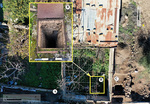
The excavation (c. 25 sq m) was conducted in the center of the ancient settlement of ‘Elabbon in an area where residential buildings from the early twentieth century CE still stand. The excavation was also near a well (Fig. 2:B), which according to community elders, existed for at least a century. The Survey of the Palestine Exploration Fund (PEF) identified nearby a sarcophagus and remains of a colonnaded building (Conder and Kitchener 1881:381). Excavations in the surrounding area found quarried tunnels (Tefilinski 1963), architectural remains from the Iron Age II and the Roman and Byzantine periods and pottery from the Mamluk and Ottoman periods (Feig 2011; Gosker 2013; Cinamon 2015; Klein and Distelfeld 2023).
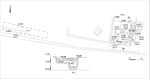
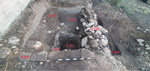
The location of the excavation area between settled houses and existing infrastructure required that the excavation be conducted in two sections (Figs. 2, 3; 3D model): a narrow strip in the west (Fig. 2:A; 1.2 × 8.0 m) and an excavation square in the east (Fig. 2:C; 4 × 4 m; Fig. 4). A layer of modern refuse and accumulation was cleared at the start of the excavation. The excavation exposed an accumulation of soil and finds from the Mamluk period; remains of a building that, based on pottery and ammunition, was constructed during the British Mandate and used until present day; and a modern terrace wall, refuse pit and road section. Additionally, pottery dating to the Umayyad and Abbasid periods was discovered. The excavation was halted at a depth of c. 1.5 m below the surface and did not reach bedrock or sterile soil.
An accumulation of grayish-brown soil (L113, L115) containing Mamluk-period pottery was found in the eastern excavation square. Above Accumulation 113, a fill of gray soil used to level the area (L111) was found, and it was dated to the late Ottoman period through the end of the British Mandate by characteristic pottery sherds as well as ammunition from the end of the British Mandate. Above Fill 111 were the remains of a building, including a wall (W105) and a light colored tamped-earth floor (L110). The building was seemingly constructed after the British Mandate and used until the present day.
In the northeastern part of the square, excavations revealed a Mamluk-period agricultural soil accumulation (L109) and, above it, a modern terrace wall (W108). Wall 108 damaged the building and therefore post-dates it. The building was also damaged by a refuse pit (L112), containing animal bones, glass fragments and pieces of rusty metal.
A section of a modern road (L103) made of crushed and packed kurkar was found in the western excavation area. Next to it, there was a pair of hewn stones (L107) that served as a step between plots at different levels. Similar steps were still in use in the adjacent lot north of the excavation area.
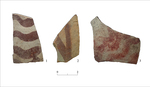
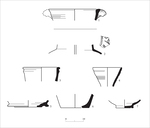
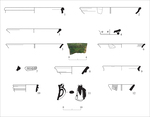
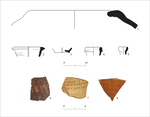
The Pottery Finds. Pottery from the Umayyad, Abbasid, Mamluk and late Ottoman–British Mandate periods was found in the excavation. Finds from the Umayyad period included fragments of jars with painted decoration (Fig. 5:1–3; Dolinka 2021) and a cooking pot (Fig. 6:1; Stacey 2004:123). Finds from the Abbasid period included fragments of decorated jars (Fig. 6:2) and jugs (Fig. 6:3–7). Finds from the Mamluk period included numerous bowl sherds (Fig. 7:1–7), most of them glazed, including monochrome bowls (Fig. 7:2–4), monochrome bowls with sgraffito decoration (Fig. 7:5, 6) and a fragment of a bowl imported from Italy (Fig. 7:7). A pair of holes was noted on the base of Bowl No. 4; these probably enabled the bowl to be hung. Additional finds from the Mamluk period included fragments of a cooking bowl (Fig. 7:8) and a cooking vessel (Fig. 7:9) as well as jars (Fig. 7:10) and handmade jugs decorated with geometric patterns (HMGP Ware; Fig. 7:11, 12). Finds from the late Ottoman period and the British Mandate included fragments of a ṭabun (Fig. 8:1), Gaza Ware jugs (Fig. 8:2–5), body sherds of jugs from southern Lebanon (Fig. 8:6) and the coastal area (Fig. 8:7; Stern 2014) and a body sherd of a mustard-yellow glazed bowl from France (Fig. 8:8; Foy Richez and Vallauri 1986:141–143; Berger 2015: Fig. 6:4, 5).
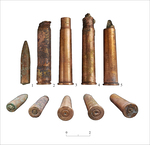
The Ammunition (see Appendix). A bullet (Fig. 9:1) and four cartridges (Fig. 9:2–5) were found. Bullet No. 1 was manufactured in the first half of the twentieth century CE, but a more precise date cannot be determined. Cartridge No. 2 was manufactured during World War I, while Cartridges Nos. 3–5 were manufactured during World War II and were probably used during the War of Independence.
Cartridge No. 2 is a 7.92 mm Mauser, manufactured in Germany in 1916; the manufacturer’s stamp is damaged. The cartridge seems to have been part of the ammunition supplied to the Ottoman army during World War I. The cartridge was not fired and may have been dismantled to extract the gunpowder.
Cartridges Nos. 3–5 are 7.7 mm cartridges manufactured in Britain, and all bore firing pin impressions. Cartridges Nos. 3 and 4 are of the MKVII (universal) type. Nitro gunpowder was found in Cartridge No. 5, contrasting with the cordite gunpowder typical of British ammunition. The firing marks indicate that Cartridge No. 4 was fired from a British BREN machine gun. Non-identical firing pin marks were observed on Cartridges Nos. 3 and 5; therefore, it seems that they were fired from different rifles.
In December 1937, armed battles were fought between the British army and Arab militias around ‘Elabbon and nearby ‘Arraba (Davar 1937). During the War of Independence, at the end of October 1948, the Arab Liberation Army under the command of Qawuqji, along with some villagers from ‘Elabbon, fought against the Golani Brigade (Sela 2004). The ammunition found in the excavation may have originated from these battles
Despite the limited scope of the excavation, the remains exposed contribute to our understanding of the early settlement in ‘Elabbon. The pottery sherds from the Umayyad and Abbasid periods, which were discovered here for the first time in this excavation, may indicate that the site was also occupied during the Early Islamic period. This finding undermines a previous suggestion (Cinamon 2015) that there was a settlement gap in ‘Elabbon during the Early Islamic period.
References
Berger U. 2015. El-Nabi Yusha‘. HA–ESI 127. https://doi.org/10.69704/jhaesi.116.2004.24854
Cinamon G. 2015. ‘Elabbon. HA–ESI 127. https://doi.org/10.69704/jhaesi.116.2004.24819
Conder C.R. and Kitchener H.H. 1881. The Survey of Western Palestine I. London.
Davar 1937: “The War against the Militias in the North Continues”. Davar Newspaper, 22 Tevet 1937, 26 December 1937, p. 1. (Hebrew).
Dolinka B.J. 2021. The Islamic Pottery from Gloria Hotel, Jerusalem. In Y. Zelinger, O. Peleg-Barkat, J. Uziel and Y. Gadot eds. New Studies in the Archaeology of Jerusalem and its Region 14. Jerusalem. Pp. 199–218. https://doi.org/10.2307/j.ctv2175qkc.12
Feig N. 2011. ‘Elabbon. HA–ESI 123. https://doi.org/10.69704/jhaesi.116.2004.1633
Foy D., Richez F. and Vallauri R. 1986. La céramique en usage dans l’atelier de verrier de Roquefeuille (Pourrières, Var): exemple d’un dépotoir domestique de la première moitié du XVIIIe siècle. Archéologie du Midi Médiéval 4:135–149. https://doi.org/10.3406/amime.1986.1124
Gosker J. 2013. ‘Elabbon. HA–ESI 125. https://doi.org/10.69704/jhaesi.116.2004.2219
Klein E. and Distelfeld N. 2023. ‘Elabbon. HA–ESI 135. https://doi.org/10.69704/jhaesi.116.2004.26335
Sela A. 2004. The ‘Arab Liberation Army’ in the Galilee in the 1948 War. In A. Kadish ed. The War of Independence, 1948–1949. Tel Aviv. Pp. 207–267 (Hebrew).
Stacey D. 2004. The Pottery. In D. Stacey. Excavations at Tiberias, 1973–1974: The Early Islamic Periods (IAA Reports 21). Jerusalem. Pp. 89–147. https://doi.org/10.2307/j.ctt1fzhf5c
Stern E.J. 2014. The Crusader, Mamluk and Early Ottoman-Period Pottery from Khirbat Din‘ila: Typology, Chronology, Production and Consumption Trends. ‘Atiqot 78:71–104. https://doi.org/10.70967/2948-040X.1680
HA 1963: An Ancient Tunnel Near ‘Eilabun. HA 5:14–15 (Hebrew).
White H. and Munhall B. 1963. Cartridge Headstamp Guide. Bel Air, Maryland.
Keywords
Umayyad period, Abbasid period, Mamluk period, Ottoman period, British Mandate, remains of a building, ammunition, terrace wall
Publication Date
07/09/2026
Link to Excavation Repository
Report Type
Final Report