
Dimona (A-8420)
Permit/License Number
A-8420
Excavation Report
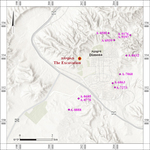
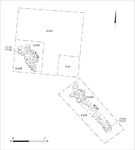
During February 2019, a trial excavation was conducted in northwestern Dimona (Permit No. A-8420; map ref. 20180–218/55390–430; Fig. 1), prior to building a new neighborhood. The excavation, on behalf of the Israel Antiquities Authority and funded by the Ministry of Construction and Housing, was directed by T. Abulafia (field photography), with the assistance of M. Hemed (area supervision), E. Aladjem (surveying and aerial photography), Y. Alamor (administration), N.S. Paran (consultancy), I. Azoulay (plans), D. Eisenberg-Degen (scientific guidance), A. Dubovsky (flint drawing), A. Fraiberg (digital scanning), M. Pasternak (pottery consultancy), I. Lidsky-Reznikov (pottery drawing), S. Talis from the IAA and workmen from ‘Ar‘ara and Kuseifa.
The excavation was conducted on the southeastern fringe of the northern Negev Highlands, south of Naḥal Dimona, following a preliminary development survey that was carried out by the author (License No. S-815/2017). Additional nearby surveys (Eldar-Nir and Shemesh 2014; License Nos. S-648/2016, S-820/2017, S-872/2018) identified knapping sites from the Middle Paleolithic and Epipaleolithic, seasonal sites from protohistoric periods and campsites from the Byzantine and Islamic periods to the Ottoman period. Previous excavations in Dimona and its surrounding area uncovered sites from the Middle Paleolithic (Abulafia and Oron 2023 [Fig. 1: A-8685, A-8770]; Permit Nos. A-8432, A-8888, A-9176, A-9197), Neolithic, Chalcolithic, Early Bronze Age (Permit Nos. A-9176, A-9197) and Intermediate Bronze Age (Paran and Aladjem 2014 [Fig. 1: A-4584]; Paran 2018a [Fig. 1: A-6863]; Paran 2018b [Fig. 1: A-6939]; Paran 2018c [Fig. 1: A-7606), Paran 2018d [Fig. 1: A-7273]).
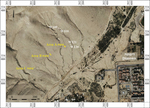
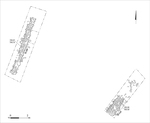
Three excavation areas (A–C; Fig. 2) were opened, each on a different spur. The areas were divided into 2 × 2 m squares and excavated using methods characteristic of prehistoric excavations. The sediment was fully sieved through a 2 mm mesh. Remains of buildings and installations were found in Area A (65 sq m), and two building phases were identified and dated to the Chalcolithic period (5000–3500 BCE) and Early Bronze Age (3500–2250 BCE). Buildings from the same periods were also uncovered in Area B (68 sq m). A scatter of knapped flint and a few small pottery sherds from the Ottoman period were found in Area C (12 sq m). In addition, four walls were identified north and northeast of these areas, but they could not be dated.
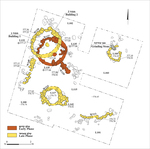
Area A (Fig. 3)
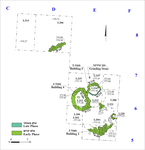
The Early Phase. Remains of a circular building (Building 1; diam. c. 2.5 m), delineated by a wall (W127) built of medium and small fieldstones, were found; only the foundation of the wall survived. Another wall (W129) built of small fieldstones abuts W127 from the southeast. The lack of remains in the southern and southeastern part of the building may indicate the existence of an entrance, or alternatively, it may reflect poor preservation. In the eastern and southern parts of the building, a floor bedding (L135) of flat small stones laid close together was found. Above the bedding was a scant accumulation of soil containing a few flint items from the Chalcolithic period and Early Bronze Age. A stone that was probably the base of a column was also identified in the building; it seems to have been moved slightly from its original location.
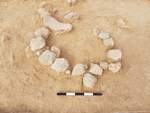
The Late Phase. Remains of another circular building (Building 2), which was built over Building 1 of the Early Phase, were found. Close to this building were three circular installations (L105, L117, L142) and two walls (W113, W140), all poorly preserved. These remains were found on the surface, and only the lower parts of the stones were sunk into the ground. The wall that delineates Building 2 (W126; diam. 2.2 m) was built of medium-sized fieldstones laid in two adjacent rows and in some places a single row. A stone that served as a basis for a column was found at the center of the building. The walls and installations that were found in proximity to the building were all built of medium and small fieldstones. A grinding stone (0.2 × 0.5 m) was found in Installation 105 (diam. c. 2 m; Fig. 4). Installations 117 (diam. 1.5 m) and 142 (diam. 0.5 m) are adjacent to each other. Wall 140 probably delineated a courtyard or a pen.
Few finds were found in this area, mainly on the surface and in the area of the buildings. Flint items characteristic of the Chalcolithic period and the Early Bronze Age were found as well as a single pottery body sherd with an unclear date.
Area B (Fig. 5).
Remains of the foundations of three circular structures (Structures 3, 4, 5) built next to each other in a cluster and a wall (W207) to the northwest were exposed. Two sub-phases were identified in one of the structures. The structures are poorly preserved and are therefore difficult to reconstruct. The structures’ foundations were built of large and medium-sized fieldstones and are partially preserved. Structure 3 (L204; diam. c. 4 m) is the largest uncovered, but only the southern part of its delineating wall (W205) survived. A small circular installation (L220, diam. 0.5 m) built of small stones was uncovered next to W205; the stones have a pinkish hue, so it is probable that they were heated. Only the western part of the delineating wall (W209) of Structure 4 (L212; diam. c. 2 m) survived. A medium-sized stone (length 0.3 m), which probably served as a column base, was uncovered at the center of the structure. In Structure 5 (L216, diam. c. 2 m), mainly the northern part of the delineating wall (W210) survived. A late building phase was identified in this structure, in which the space was divided into two cells by a curved wall (W218), which was built of small stones. Wall 207 was built of medium-sized fieldstones that were placed in two irregular rows.
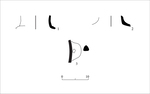
Knapped flint items (below) and worn pottery sherds, mostly dated to the Chalcolithic period, and a few to the Early Bronze Age, were found inside and around the structures. The pottery assemblage includes 216 body sherds, six handles and two neck fragments. The clay firing is medium–high quality, and the fabric usually contains medium or large sandy inclusions and at times organic inclusions. The fabric of most vessels is similar in color and quality to vessels from the Chalcolithic period and Early Bronze Age. Some vessels were typologically dated to the Chalcolithic period, including jar fragments (Fig. 6:1, 2) and a jar handle with a triangular cross-section (Fig. 6:3; cf. R. Cohen 1999:19). A single grinding stone was also found in the excavation area.
Area C
Three squares were excavated, and finds were only discovered in the upper layers (top 5 cm). Below this surface layer, the soil was sterile. The finds include flint items, a few small Black Gaza Ware pottery sherds and modern finds (nails, bullets and metals) that may be attributed to the IDF presence in the region. The flint assemblage was not processed because the area underwent considerable damage and the archaeological context was unclear.
Walls
Remains of four walls (W109, W110, W120, W121) built from medium and small-sized fieldstones were uncovered. Walls 109 and 110 (max. width 1.1 m, max. preserved height 0.3 m; Fig. 7) were found up a streambed. Given their location and considerable thickness, they probably served as dams. Walls 120 and 121 (max. thickness 0.7; Fig. 8) were poorly built and preserved to a height of one course. No finds that could date these walls were discovered.
The Flint Assemblage
The raw material of most of the flint items that were found in Areas A and B is local and consists of small beige to dark brown pebbles (length c. 10 cm) with a dark cortex and occasionally pebbles with spots of various shades. This raw material was probably quarried from outcrops on a hill, about 200 m west of the excavation area. More rarely, translucent chalcedony and grayish flint, which are not locally available, were used.
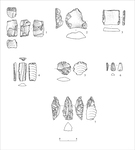
Area A. Three hundred and three flint items (Table 1) were collected, mostly from the surface. 69.31% of the assemblage is debitage, including predominantly flakes and primary flakes; 17 tools and four cores were also identified. Most of the cores were nearly exhausted, and they include a core (Fig. 9:1) for bladelets or flakelets. These cores may have originated from Area B since they were used to produce micro-burins, which were identified only in Area B. One of the cores is broken (Fig. 9:2). The tools include borers made from bladelets (N=2), one from opaque brown raw material and one from chalcedony (Fig. 9:3), as well as simple end scrapers (N=2; Fig. 9:4), a denticulated end scraper and a micro-end scraper (micrograttoir; Fig. 9:5). Blades with a convex back (N=3) were identified. One has a burin on the distal end (Fig. 9:6), apparently added during a late use phase. The raw material of this blade is gray with a rough texture, unlike the other tools, which are made of brown-beige raw material. Tools with notches (N=3), awls (N=2), retouched flakes (N=2) and a truncated tool were also identified. Because of the small assemblage size, it is difficult to identify common types. Nevertheless, it is possible to identify borers, backed blades and a micro-end scraper, which are typical of the Chalcolithic period and, in some cases, the Early Bronze Age.
Area B. One thousand nine hundred and sixty-five flint items (Table 1) were collected. 46.31% of the assemblage is debitage, a lower quantity than found in Area A, and the debitage includes mostly flakes and primary flakes as well as a few blades and bladelets, core trimming elements and maintenance debitage. The tools constitute 9.01% of the assemblage, and the cores constitute 1.63%. Three items related to the production of microliths using the micro-burin technique (MBT) were identified, but there were no microlithic tools that could be associated with these.
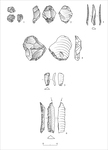
Thirty-two cores were collected in Area B (Table 2). The assemblage contains mainly cores for flakes (59.38%) and cores for flakes and blades (28.1%), perhaps unintentional biproducts. Most of these two types of cores have a single striking platform. Two small chalcedony cores (12 × 14 × 15 mm) may have been used to produce blanks for micro-borers. Four cores (12.5%) were used for blades and bladelets (Fig. 10:1); this is a large quantity relative to the number of blades and bladelets in the assemblage (5.9%). It seems that most of the cores were abandoned because of hinge scars or core-exhaustion. Three–five scars were counted on most cores (N=14); 6–8 scars were counted on 10 cores; and 9–13 scars were found on eight cores. The latter is a large number of scars, considering the small core size (average length less than 30 mm).
Most of the flint tools are ad-hock tools (Table 3). The most common tool group (23.2%) is retouched flakes. These were mostly formed on beige-brown flint, the typical raw material for the assemblage. Most have no cortex, and only eight were shaped on primary flakes. Following the retouched flakes, notches and end scrapers are most common. The notches were produced on local raw material, and three have multiple notches.
The end scrapers include several types, some considered ad-hoc tools and other considered indicative of specific periods. The most common type is the atypical end scraper (N=6; Fig. 10:2), followed by the typical/simple end scraper (N=4). In addition, there are three angular end scrapers shaped on thick flakes, two of these with cortex, a rectangular tabular scraper (Fig. 10:3) and a fan scraper. These types are characteristic of the Chalcolithic period, and some remained in use during the Early Bronze Age.
Another large group is the retouched blades and bladelets (13.56%), which includes ad-hoc tools as well as diagnostic ones, such as backed blades and sickle blades. The blades (average size 6.3 × 16.6 × 32.2 mm) were mostly knapped on beige-brown flint. Seven blades, three of them primary, have cortex. Most of the bladelets (average size 3.5 × 11.0 × 24.4 mm) have fine to semi-abrupt retouch. Three sickle blades (Fig. 10:4) with abrupt retouch on their left side and fine denticulation on the right side were identified in the assemblage. They were knapped on grayish raw material, which differs from the primarily used raw material and presumably originated from further away. Although retouched blades and bladelets are common in the assemblage, their quantity is small in comparison to sites farther north (the desert-fringe and Mediterranean areas). This phenomenon is observed at other sites in the desert during this time span. Vardi (2005) surmised that this may reflect an economy that is not based on agriculture.
Denticulated blades and bladelets (10.17%; Fig. 10:5) are also common in the assemblage, usually knapped on simple flakes, most of them with cortex. Only four tools were knapped on primary flakes and two on blades.
Micro-borers (N=11; Fig. 10:6) constitute 6.2% of the tool-assemblage; they are very small (3.4 × 6.7 × 18.2 mm) and made of chalcedony, and they are commonly triangular or straight and narrow. This tool is known from the Chalcolithic period and Early Bronze Age, although the morphology is more typical of Chalcolithic sites in the Negev (Rosen 1997:68–71). This tool type was used to drill beads, but none were found during the excavation.
Borers and awls are rare at the site, but they are typical of the Chalcolithic period and the Early Bronze Age and are known from nearby sites dating to these periods (Pasternak 2018; Abulafia 2023). One borer was formed on a thick flake and worked on both faces (Fig. 10:7). A transverse arrowhead was also recovered. It was formed on a chip of pink raw material that was probably heated (not drawn). This form is characteristic of the Chalcolithic period and remained in use during the Early Bronze Age (Rosen 1997:39–44).
Summary
The architectural remains that were discovered in the excavation are characterized by foundations of relatively small circular structures surrounded by small installations and walls that may have been boundary walls. Numerous flint tools were discovered. The structures were constructed next to Naḥal Dimona and flint outcrops, and they were likely used only for short-term occupations. In Area A, the same area and structures were re-occupied, forming two phases.
The material culture in the excavation can be correlated with two periods: the Chalcolithic and the Early Bronze Age. The assemblage in Area B includes a considerable number of micro-borers that were used to make beads. The scarce quantity of sickle blades and backed blades indicates that the subsistence economy was based mainly on herding sheep and goats, with perhaps a little dryland agriculture (Vardi 2005). The architectural remains are characteristic of seasonal occupations in the desert by semi-nomadic populations (Dever 1992; Vardi 2005). The excavation joins other excavations conducted around Dimona in recent years that found evidence for pastoralism during the prehistoric periods (Paran and Aladjem 2014; Paran 2018a; 2018b; 2018c; 2018d; Pasternak 2018; Atkins 2021:174–200; Abulafia 2023).
References
Abulafia T. 2023. Abu Qurinat. HA–ESI 135. https://doi.org/10.69704/jhaesi.116.2004.26411
Abulafia T. and Oron M. 2023. Dimona, Industrial Zone. HA–ESI 135. https://doi.org/10.69704/jhaesi.116.2004.26347
Atkins S.P. 2021. The Role of Negev Highland Pastoral Nomadic Societies in Interactions Between Nilotic and South-West Levantine Groups During the 4th and Early 3rd Millennia BC. Ph.D. diss., Ben-Gurion University. Be’er Sheva‘.
Cohen R. 1999. Ancient Settlement of the Central Negev I: The Chalcolithic Period, the Early Bronze Age and the Middle Bronze Age I (IAA Reports 6). Jerusalem (Hebrew). https://doi.org/10.69704/iaaRepV000.1996.75
Dever W.G. 1992. Pastoralism and the End of Urban Early Bronze Age in Palestine. In O. Bar Yosef and A. Khazanov eds. Pastoralism in the Levant: Archaeological Materials in Anthropological Perspective. Madison. Pp. 83–91.
Eldar-Nir I. and Shemesh N. 2014. Dimona Map (174) (Archaeological Survey of Israel).
Paran N.S. 2018a. Dimona, Mamshit Neighborhood (A). HA–ESI 130. https://doi.org/10.69704/jhaesi.116.2004.25500
Paran N.S. 2018b. Dimona, Mamshit Neighborhood (B). HA–ESI 130. https://doi.org/10.69704/jhaesi.116.2004.25499
Paran N.S. 2018c. Dimona, Mamshit Neighborhood (C). HA–ESI 130. https://doi.org/10.69704/jhaesi.116.2004.25498
Paran N.S. 2018d. Dimona, Mamshit Neighborhood (D). HA–ESI 130. https://doi.org/10.69704/jhaesi.116.2004.25497
Paran N.S. and Aladjem E. 2014. Harei Dimona. HA–ESI 126. https://doi.org/10.69704/jhaesi.116.2004.11636
Pasternak M.D. 2018. Nahal Tale. HA–ESI 130. https://doi.org/10.69704/jhaesi.116.2004.25474
Rosen S.A. 1997. Lithics After the Stone Age: A Handbook of Stone Tools from the Levant. Walnut Creek– London–New Dehli.
Vardi J. 2005. The Lithic Assemblage from Ein Ziq: An Early Bronze Age IV (2300-2000 BCE) Site from the Negev Highlands. M.A thesis., Ben-Gurion University. Be’er Sheva‘ (Hebrew; English abstract).
Keywords
Negev Highlands, Nahal Dimona, seasonal occupation, nomadic settlement, prehistoric site, building remains, installations, dams, flint, Chalcolithic period, Early Bronze Age, Ottoman period
Publication Date
20/10/2026
Link to Excavation Repository
Report Type
Final Report