
Erez (A-9503)
Permit/License Number
A-9503
Excavation Report
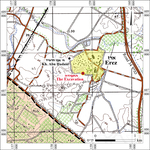
During January 2023, a salvage excavation was conducted in the southern part of Kibbutz Erez (Permit No. A-9503; map ref. 158715–869/607433–522; Fig. 1), prior to its extension. The excavation, on behalf of the Israel Antiquities Authority and funded by Kibbutz Erez, was directed by M. Margolis, with the assistance of E. Aladjem and A. Montagu (surveying and photogrammetry), V. Lifshits (aerial photography), S. Lifshitz (field photography), Y. Alamor (administration), A. Golani (scientific guidance), G. Seriy (pottery), A. Fraiberg (digital documentation), I. Azoulay (plans and sections drawing), G. Samora-Cohen and Y. Nagar (physical anthropology; Appendix 1), O. Barzilai, A. Rasiuk, A. Levy, S. Tal, I. Radashkovsky, R. Prokofiev, L. Davies, I. Kapranov and J. Vasiutin from the IAA and workmen from the Palestinian Authority.
The excavation was located on the eastern slope of a hill, north of the perimeter fence of Kibbutz Erez, which was built over the ruins of the Arab village Dimra, which was built over Khirbat Abu Ḥadaid. Surveys in the area documented wall foundations, a mosaic floor, caves, pits, columns and capitals and artifacts from the Middle Bronze Age II, Iron Age and Byzantine period were collected (License Nos. S-486/2014, S-588/2015, S-768/2017, S-137/2021). Excavations in the surrounding area uncovered remains of a building dated to the Byzantine period and debris from a pottery workshop (Paran 2007) as well as three cist graves dated to the Late Roman period (Fraiberg 2020).
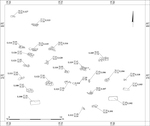
The present excavation revealed graves dug into the ground (Fig. 2), most of them dated to the Ottoman period and some to recent times.
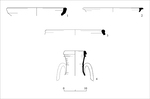
Twenty-five graves were dug into the ground in an approximately east–west orientation. Most were dated to the Ottoman period, excluding four modern graves (L100–L103). The Ottoman graves include two types: pit graves and cist graves. Eleven pit graves were found (L104, L106, L113–L116, L120, L121, L124, L126, L127; 0.4 × 1.4 m, depth c. 0.3 m); these were dug into the ground and covered with lime or kurkar fieldstones (stone dimensions c. 0.3 × 0.3 × 0.4 m). In addition, 14 cist graves were found (L100–L103, L105, L107, L108, L110–L112, L118, L119, L122, L123; c. 0.2 × 0.6 m, depth 0.50–0.75 m); these were dug into the ground, lined with fieldstones and covered with a gable built of rectangular kurkar stones (0.3 × 0.3 × 0.4 m). Human remains were found in most graves (below). Four fragments of Black Gaza Ware vessels dated to the Ottoman period were found next to Graves 111, 114, 118 and 126; these include a krater (Fig. 3:1), two bowls (Fig. 3:2, 3) and a storage jar (Fig. 3:4). Some jewelry was found in Grave 105: three bronze rings, including two near the right hand of the deceased and one near the left hand, a bronze bracelet near the right hand and square glass beads near the neck, which were probably from a necklace. Wood prayer beads were found next to the skeleton in Grave 111.
Physical Anthropology
Galit Samora-Cohen and Yossi Nagar
Human bones were found in 21 graves (Appendix 1). The bones were analyzed in the excavation area and then reburied on site. The bones were poorly preserved mainly due to roots that penetrated the graves, so it was difficult to reconstruct complete anthropological indexes. Age was estimated based on the stage of tooth eruption, development and wear (Hillson 1986:176–201), maximum length of long bones (Ubelaker 1989), fusion of the epiphyses of the long bones, vertebrae and pelvis (Johnston and Zimmer 1989) and changes to the bone structure of the vertebrae and pelvis (Brooks and Suchey 1990; Waldron 1991). For adults, sex was determined based on the morphology of the skull and pelvis and dimensions of the arm and thigh bones (Bass 1987:82, 153, 207–215, 230). Height was estimated in a few individuals based on the length of the femur (Feldeman, Kleckner and Lundy 1990). When feasible, pathologies and epigenetic traits in the cranium and post-cranial skeleton were documented according to a standardized protocol (Nagar 2011).
Despite the poor preservation of the bones, the burial position was clear in most cases. The graves were used for single burials with one exception (Grave 108), in which two children were interred. The children were found in articulation, one next to the other, and were therefore presumably interred at the same time. Excluding one individual (see below), all the individuals were placed on their right side with the head on the west and facing south; this custom is known in Muslim burial practices (Avni 1996:25–26; Gorzalczany 2007). In Grave 105, a skeleton of a 15–16 years old pregnant young woman was found with bones of a fetus between her legs. This may suggest that the cause of death was complications during labor. The interred lay supine, contrary to Muslim burial practices, in which the body faces Mecca. The difference could suggest that this was a forbidden pregnancy. Sex was estimated for about 85% of the adult individuals; there were roughly an equal number of males and females. This indicates that the cemetery represents a regular civilian population, who died between 1–60 years old (Appendix 1). The individuals were normally interred without grave goods, excluding personal effects, such as bracelets and earrings, that were found next to the bones of children and women. Height was estimated for four individuals with complete femurs. These individuals were identified as male and 162, 169, 173 and 175 cm tall (average height c. 170 cm). The bones are relatively heavy and show obvious muscles marks.
References
Avni G. 1996. Nomads, Farmers and Town-Dwellers: Pastoralist-Sedentist; Interaction in the Negev Highlands, Sixth–Eighth Centuries CE (Supplement to the Archaeological Survey of Israel). Jerusalem.
Bass W.M. 1987. Human Osteology: A Laboratory and Field Manual. Columbia.
Brooks S. and Suchey J.M. 1990. Skeletal Age Determination Based on the Os Pubis: A Comparison of Acsádi–Nemeskéri and Suchey–Brooks Methods. Human Evolution 5:227–238. https://doi.org/10.1007/BF02437238
Feldesman M.R., Kleckner J.G. and Lundy J.K. 1990. Femur/Stature Ratio and Estimates of Stature in Mid- and Late-Pleistocene Fossil Hominids. AJPA 83:359–372. https://doi.org/10.1002/ajpa.1330830309
Fraiberg A. 2020. Khirbat Abu H̱adaid. HA–ESI 132. https://doi.org/10.69704/jhaesi.116.2004.25800
Gorzalczany A. 2007. The Kefar Saba Cemetery and Differences in Orientation of Late Islamic Burials from Israel/Palestine. Levant 39:71–79. https://doi.org/10.1179/lev.2007.39.1.71
Johnston F.E. and Zimmer L.O. 1989. Assessment of Growth and Age in the Immature Skeleton. In M.Y. Iscan and A.R. Kenneth eds. Reconstruction of Life from the Skeleton. New York. Pp. 11–22.
Hillson S. 1986. Teeth. Cambridge.
Nagar Y. 2011. Human Osteological Database at the Israel Antiquities Authority: Overview and Some Examples of Use. Bioarchaeology of the Near East 5:1–18.
Paran N.S. 2007. Erez (East). HA–ESI 119. https://doi.org/10.69704/jhaesi.116.2004.599
Ubelaker D.H. 1989. Human Skeletal Remains: Excavation, Analysis, Interpretation. Washington.
Waldron T. 1991. The Prevalence of, and the Relationship Between Some Spinal Diseases in a Human Skeletal Population from London. International Journal of Osteoarchaeology 1:103–110. https://doi.org/10.1002/oa.1390010206
Keywords
graves, cemetery, pit graves, cist graves, Khirbat Abu Ḥadaid, human bones, Ottoman period, modern times, Muslim burial
Publication Date
21/10/2026
Link to Excavation Repository
Report Type
Final Report